

“True systemic resilience isn’t found in replacing human judgment. It is found in architecting the exact boundaries where it remains irreplaceable.” — Nadina D. Lisbon
Hello Sip Savants! 👋🏾
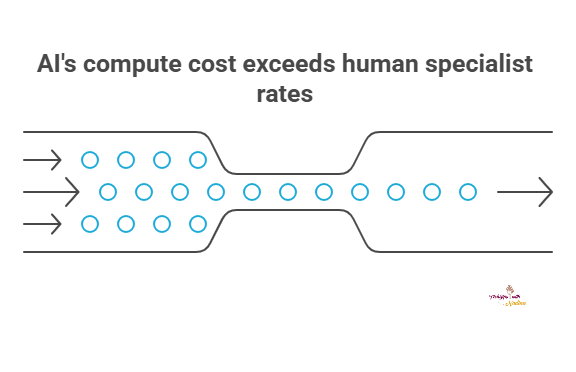
Just this week, Merlin Labs began testing autonomous flight communication systems to mitigate global pilot shortages [1]. Simultaneously, internal findings from tech giants revealed a stark operational reality. The compounding computational overhead of complex AI agents means running these systems can actually cost more than employing human professionals [2]. As autonomous architecture scales, leadership faces a massive reality check. Decoupling humans from the operational loop is proving to be financially volatile and culturally risky.
3 Tech Bites
✈️ AI in the Cockpit
Merlin Labs is deploying natural language processing to automate high stakes aviation radio communications. Federal oversight boards are currently evaluating the system to minimize human error. However, aviation purists maintain that algorithms cannot match an experienced pilot’s instinct during an unprecedented crisis [1].
💰 The Token Tax
Internal corporate data indicates that the continuous infrastructure required for multi agent LLM orchestrations is skyrocketing. The exponential growth of token context windows makes full automation a massive line item expense. It frequently outprices retaining skilled human talent [2].
🤝 The Trust Dividend
Consumer touchpoints are oversaturated with automated triage. Market sentiment is steadily shifting back to authenticity. Organizations that intentionally design human in the loop guardrails are seeing a distinct trust dividend. This yields significantly higher client retention and brand authority.
5-Minute Strategy
🧠 The Token to Talent ROI Triage
Execute this rapid structural audit to ensure your automated systems are not draining your budget or eroding user trust.
Audit the Token Burn: Isolate your highest frequency AI workflows. Calculate the true compute cost per transaction. Compare it directly to the hourly rate of a human specialist.
Map the Empathy Threshold: Grade the workflow touchpoints based on emotional stakes. Flag the process for immediate human oversight if an algorithmic hallucination risks alienating a client.
Decouple and Augment: Rebuild the process. Strip the AI of autonomous execution. Reposition it as an asynchronous drafting assistant. Ensure a human expert remains the final gateway for validation.
1 Big Idea
💡 Reclaiming the Human Core in a Silicon Economy
For the past several years, the prevailing enterprise narrative treated artificial intelligence as a seamless substitute for routine labor. It was sold as a frictionless method to slash overhead. Yet, we are rapidly approaching an architectural tipping point. The economic reality is finally refuting the hype. The staggering computational power required to process massive context windows carries an unprecedented financial premium [2]. When executing a complex model costs more than compensating a human professional, the foundational argument for absolute automation completely collapses [2].
This economic correction invites a much deeper systemic calculation. Algorithmic systems are exceptional at executing deterministic patterns. They easily parse structured datasets. However, they operate entirely divorced from situational awareness and genuine accountability. In a high stakes environment like aviation, an algorithm can process clear air traffic commands. It possesses no biological instinct for survival to navigate a cascading failure safely [1].
When we rush to automate the spaces where human nuance is required, we introduce profound systemic risks. Environmental impacts also compound rapidly. Running these massive GPU clusters drains energy grids at an unsustainable rate. A sovereign architectural mindset requires us to calculate both the financial and ecological burn rates of our technology stack. Relying solely on automated output is a shortsighted strategy.
True operational brilliance is never achieved by completely erasing human presence to optimize a margin. It comes from understanding exactly where the human spirit is structurally necessary. Relationships and trust are inherently non linear. They cannot be neatly compressed into a vector database. An organization that delegates its entire relational identity to silicon agents eventually becomes sterile. It discards the vital friction that sparks genuine innovation.
As we look toward an increasingly automated horizon, smart leaders will pivot. We must deliberately reject the temptation of total displacement. Instead, we should embrace a philosophy of radical augmentation. By directing costly computing power toward mundane data synthesis, we liberate our human teams. The future belongs to organizations that treat AI as an intellectual multiplier. They intentionally structure environments where human judgment remains the definitive authority.
P.S. Are your automated workflows hitting a cost barrier? Hit reply or leave a comment and let me know. I read every response.
P.S. Share this newsletter and help brew up stronger customer relationships!
P.P.S. If you found these AI insights valuable, a contribution to the Brew Pot helps keep the future of work brewing.
Resources:
[1] AI is learning to fly airplanes — and aviation is starting to embrace it
Sip smarter, every Tuesday. (Refills are always free!)
Cheers,
Nadina
Host of TechSips with Nadina | Chief Strategy Architect ☕️🍵