

“It is easy to cut a role. It is harder to see everything it quietly held.” — Nadina D. Lisbon
Hello Sip Savants! 👋🏾
Most of the headlines lately have been about AI replacing people, and that disruption is real and worth taking seriously. There is a quieter story running alongside it, though, and it is just as instructive. Some of the same companies that cut roles for AI are now hiring people back. It is being called the AI boomerang, and it has a lot to teach about where these tools actually earn their keep.
3 Tech Bites
🔄 The boomerang shows up in the data
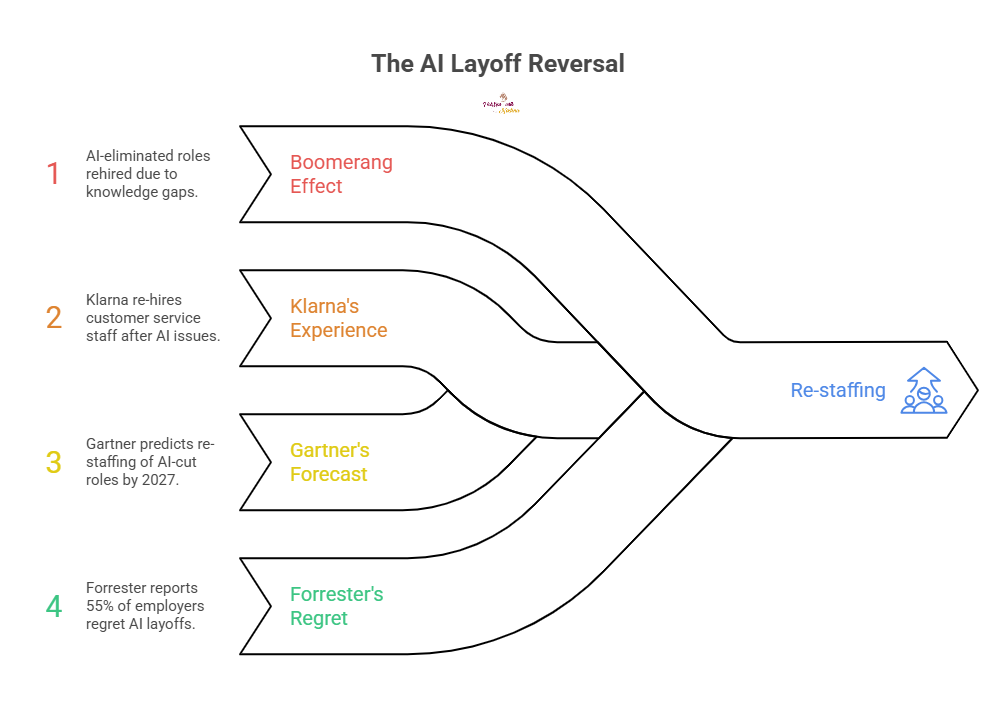
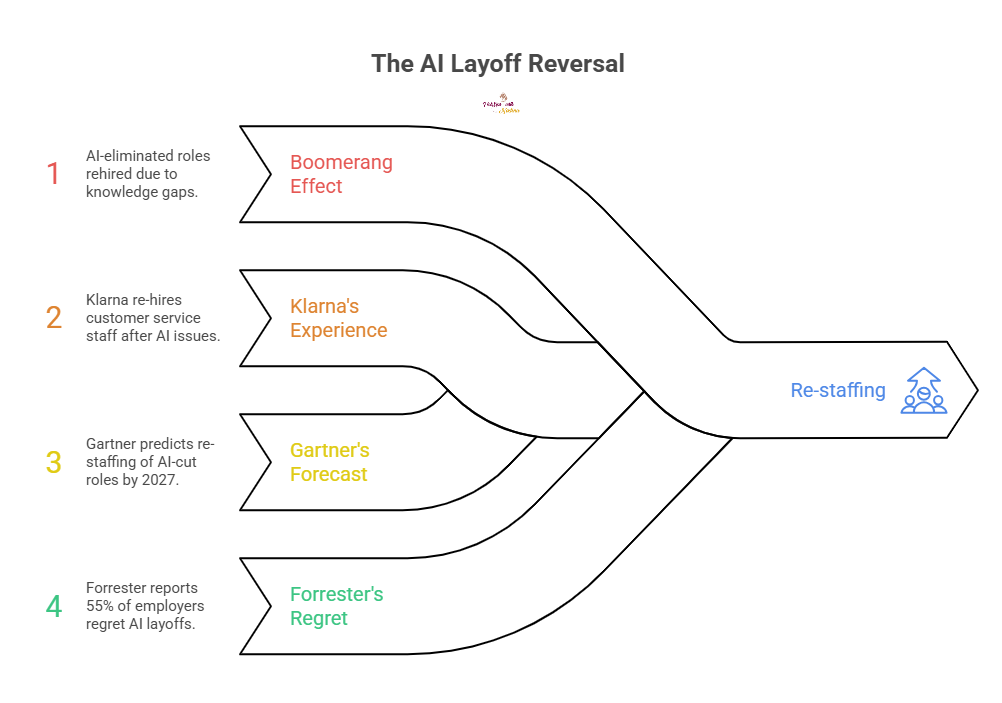
In new Robert Half research of 2,000 hiring managers, about 32% said their organization eliminated a role on the strength of AI or automation, then later rehired for that same role [1]. The most common reasons were institutional knowledge AI could not replace (40%) and more human oversight needed than expected (38%).
💳 Klarna’s public rethink
After replacing around 700 customer service roles with an AI assistant, Klarna’s CEO told Bloomberg the AI route delivered lower-quality service on the harder questions, and the company is hiring people again as part of a blended model [2].
📅 The trend has a forecast
Gartner expects that about half of the companies that cut customer service or operations staff for AI will re-staff those roles, often under new titles, by 2027 [3]. A separate Forrester figure found 55% of employers regretted their AI-driven layoffs [1].
5-Minute Strategy
🧠 Redeploy Before You Replace
AI can take real work off your plate, but it is expensive and it can only do so much. When it absorbs part of a role, the higher-leverage move is often to move the person toward what the tool cannot do, rather than out. A quick way to start, the next time AI frees up a role:
Take the next role where AI now handles a real chunk of the work.
Jot what is left that AI does not do well (judgment, the odd case, relationships, accountability).
Name one higher-value spot in the organization that needs exactly those strengths.
Sketch a redeployment that moves the person toward that work instead of off the books.
Float it with the relevant manager before any cut reaches the table.
AI is pricey and only goes so far, so the talent it frees up is usually worth moving, not losing.
1 Big Idea
💡 The Cost of the Round Trip
The story we keep hearing is AI replacing people. The story worth sitting with is what happens next for some of the companies that moved fastest. They are hiring back. Not always the same people, and not always the same titles, but the roles return [1]. That round trip is quietly one of the more honest signals we have about what these tools can and cannot carry.
Look at why the roles came back and a pattern appears. The reasons cluster around the parts of a job that are hardest to see from the outside: the institutional knowledge someone carried in their head, the judgment to handle an odd case, the read on a customer’s unspoken worry [1]. Klarna’s experience is the public version of this. The AI handled the simple, high-volume questions well, and then struggled on the ones that needed nuance, which turned out to matter more than the cost savings suggested [2].
It is worth being plain about the cost, because it is not only financial. Real people were let go, and rebuilding a team is slower and more expensive than keeping one. Trust takes a hit too, with the people who left and the people who stayed and watched. None of that is a reason for alarm, but it is a reason for care. A decision made quickly in a spreadsheet can take a long time to undo in a workplace.
The more useful framing may be to treat an AI change as a redesign of the work rather than a deletion of it. That means deciding up front where the tool carries the load and where a person stays in the loop, and saying so to the team honestly. Robert Half’s researchers made the same point: the shift that holds up is from cutting roles to rethinking them, with a clear view of where AI works best alongside people rather than in place of them [1].
So the lesson is steadying, not gloomy. The goal was never a smaller headcount for its own sake. It was good work, done reliably, for real people on the other end. The companies that keep that in view tend to make fewer round trips, and they tend to treat the humans in the loop as part of the design from the start. That is a calmer and, it turns out, a cheaper way to bring these tools on board.
If your own organization has lived some version of this, I would like to hear how it went. I read every response.
P.S. If a colleague spends their days keeping systems safe, share this newsletter and help brew up stronger customer relationships.
P.P.S. If you found these AI insights valuable, a contribution to the Brew Pot helps keep the future of work brewing.
Resources
[1] The 'AI boomerang': Why some companies are rehiring employees they laid off due to AI (Fast Company)
[2] Klarna Is Hiring Customer Service Agents After AI Couldn't Cut It on Calls (Entrepreneur)
[3] Gartner Predicts Half of Companies That Cut Customer Service Staff Due to AI Will Rehire by 2027
Sip smarter, every Tuesday. (Refills are always free!)
Cheers,
Nadina
Host of TechSips with Nadina | Chief Strategy Architect ☕️🍵